In today's fast-paced world, where work, entertainment, and communication happen on the go, our devices need to keep up. Laptops are sleek, phones are powerful, but sometimes, we crave just a little more screen real estate—without sacrificing the freedom to move. Enter the touch portable display : a game-changer that blends the best of a high-quality monitor with the convenience of portability, plus the intuitive control of touch. Whether you're a digital nomad, a student juggling classes, or someone who just loves tech that adapts to their lifestyle, this device might be the missing piece in your setup. Let's dive into what makes a touch portable display tick, why it matters, and how it's reshaping the way we interact with screens.
At its core, a touch portable display is exactly what the name suggests: a lightweight, compact screen that you can easily carry with you, equipped with touchscreen functionality. But reduce it to just "a portable monitor with touch" and you're missing the magic. Unlike bulky desktop monitors that stay glued to your desk, or tablets that prioritize app ecosystems over raw display quality, these devices are designed to be versatile . They're built to complement your existing tech—laptops, phones, even gaming consoles—by adding extra screen space wherever you need it, while letting you interact with content directly, just like you would on a tablet or smartphone.
Think about it: Have you ever tried editing a photo on a laptop trackpad and wished you could just "pinch to zoom" like you do on your phone? Or attended a work meeting and needed to annotate a presentation on the fly, but the only screen available was a static monitor? A touch portable display solves these frustrations. It's not trying to replace your laptop or tablet; instead, it's a flexible tool that adapts to how you work, play, or create.
Take the 24.5 inch portable monitor , for example. At first glance, 24.5 inches might sound too big to be "portable," but modern engineering has shrunk bezels and trimmed down weight to make even larger screens surprisingly easy to carry. Imagine setting up a dual-screen workspace in a coffee shop with a 24.5 inch model—suddenly, you've got room for your email, a spreadsheet, and a video call, all without hauling a desktop setup. And with touch, you can swipe between windows, draw on documents, or navigate apps with a tap, making the whole experience feel more natural than clicking and scrolling.
To truly appreciate a touch portable display, it helps to understand the technology that makes it possible. Let's break it down into two key parts: the touchscreen and the portability features .
Not all touchscreens are created equal. The best portable displays use capacitive touch technology , the same tech in your smartphone or tablet. Unlike older resistive touchscreens (which required pressure, like a stylus), capacitive screens respond to the electrical charge in your finger, making interactions smooth and precise. You can tap, swipe, pinch, and even use multi-touch gestures (like two-finger scrolling) with ease. But some models take it a step further with incell technology—short for "in-cell touch." In traditional capacitive screens, the touch sensors are layered on top of the display panel, adding thickness. Incell integrates the sensors into the LCD panel itself, resulting in a thinner, lighter screen with better image quality (no air gap between layers means less glare and sharper colors). It's the same tech used in high-end smartphones and even some incell portable smart TVs , and it's a game-changer for portable displays, where every ounce and millimeter counts.
Portability isn't just about size—it's about balance. A display that's too small won't add much value, but one that's too heavy defeats the purpose. Manufacturers achieve this balance through a few key design choices: ultra-thin bezels (the borders around the screen), lightweight materials like aluminum or magnesium alloy, and energy-efficient components that reduce the need for bulky batteries. Many models also skip built-in speakers or webcams (since you'll likely use your laptop's or phone's instead), further trimming weight.
Connectivity is another piece of the portability puzzle. Most touch portable displays use USB-C for power and data, which means you can plug them into your laptop, phone, or power bank with a single cable. Some even support "power delivery," so the display can charge your laptop while it's in use—perfect for long days away from an outlet. For devices without USB-C, HDMI or mini-HDMI ports are common, though they may require a separate power adapter. Either way, gone are the days of carrying a tangled mess of cords; modern portable displays keep it simple.
Not all touch portable displays are created equal. To find the right one for you, keep an eye on these essential features:
Size is personal. If you're constantly traveling, a 13–15 inch model might be ideal—light enough to toss in a backpack, yet large enough for productivity. But if you prioritize screen real estate (say, for video editing or gaming), a 24.5 inch portable monitor could be worth the slightly bulkier carry. Most manufacturers offer a range, so think about your typical use case: Do you need something to slip into a messenger bag, or are you okay with a larger case for more screen?
A display is only as good as its picture quality. Look for at least Full HD (1920x1080) resolution; anything less will feel pixelated, especially on larger screens. If you work with photos, videos, or design, consider a 4K (3840x2160) model for sharper details. Brightness is also key—aim for 300 nits or higher, so you can use the display outdoors or in well-lit rooms without squinting. Color accuracy matters too: A display with 100% sRGB coverage ensures photos and graphics look true to life, which is a must for creatives.
Since "touch" is in the name, don't skimp here. Look for displays with 10-point multi-touch, which lets you use multiple fingers at once (great for gestures like zooming or rotating). Test reviews often mention how responsive the touch is—avoid models with lag or "dead zones" where the screen doesn't register taps. Remember, incell technology often means better touch response, so keep an eye out for that feature.
Some portable displays are "wireless" in the sense that they don't need to be plugged into a power outlet—they run on a built-in battery. If you plan to use yours away from a power source (like on a plane or in a park), battery life is crucial. Aim for at least 4–6 hours of use; anything less might leave you scrambling for a charger mid-day. Keep in mind that higher brightness or touch usage can drain the battery faster, so adjust settings accordingly.
What good is a great display if you can't prop it up comfortably? Look for models with built-in stands that let you adjust the angle—some even fold flat for drawing or writing, mimicking a digital notebook. If the display doesn't have a stand, check if it's compatible with third-party ones (like tablet stands or monitor arms). Portability shouldn't mean sacrificing neck or eye strain!
Still not sure if you need one? Let's walk through real-life scenarios where a touch portable display becomes more than just a "nice-to-have"—it's a game-changer.
If you've ever tried to work from a hotel room with only your laptop screen, you know the struggle: tabs piling up, windows overlapping, and constant alt-tabbing just to check your calendar. A touch portable display solves this by turning any space into a dual-screen workstation. Hook it up to your laptop, and suddenly you've got your main work window on one screen and your email/calendar on the other. The touch feature lets you quickly switch between apps, annotate documents, or even sign PDFs with a stylus (if supported). And with a model like the 24.5 inch portable monitor, you're not sacrificing screen size for portability—you can have a near-desktop experience in a coffee shop, co-working space, or even your backyard.
Students have unique needs: taking notes, following lectures, and collaborating on group projects. A touch portable display can act as a digital notebook—use a stylus to jot down handwritten notes directly on slides or PDFs, then save them to your cloud drive. In group projects, connect it to your phone or tablet and use the touchscreen to brainstorm ideas, drag-and-drop elements in presentations, or edit shared documents in real time. Plus, it's lighter than carrying a laptop and a tablet, making it easier to haul between classes.
Gamers love extra screen space, but not everyone can lug a desktop setup to a friend's house for game night. A touch portable display lets you connect your gaming laptop, console, or even a powerful phone (via HDMI or USB-C) and enjoy a larger screen with touch controls. Imagine playing a strategy game and using touch to drag units across the map, or a puzzle game where you "flick" objects with your finger—suddenly, gaming feels more immersive. And with high refresh rates (like 120Hz or 144Hz), you won't miss a beat in fast-paced games.
Artists, designers, and video editors need precision—and touch makes that easier. Whether you're sketching with a stylus, editing photos with touch gestures, or trimming video clips by dragging a slider, the direct interaction of a touchscreen feels more natural than using a mouse or trackpad. A 24.5 inch portable monitor, with its larger canvas, is perfect for detailed work, while smaller models fit easily into a portfolio case for on-location shoots or client meetings. Plus, color-accurate displays ensure your work looks the same on the go as it does on your desktop.
Long flights, train rides, or hotel stays can get boring—unless you've got a touch portable display. Connect it to your phone or tablet and stream movies, shows, or games on a bigger screen than your device alone. The touchscreen lets you navigate apps, adjust volume, or pause playback without fumbling for a remote. And if you need to squeeze in some work during your trip, you've got a mini office setup ready to go. It's like having a portable theater and workspace in one.
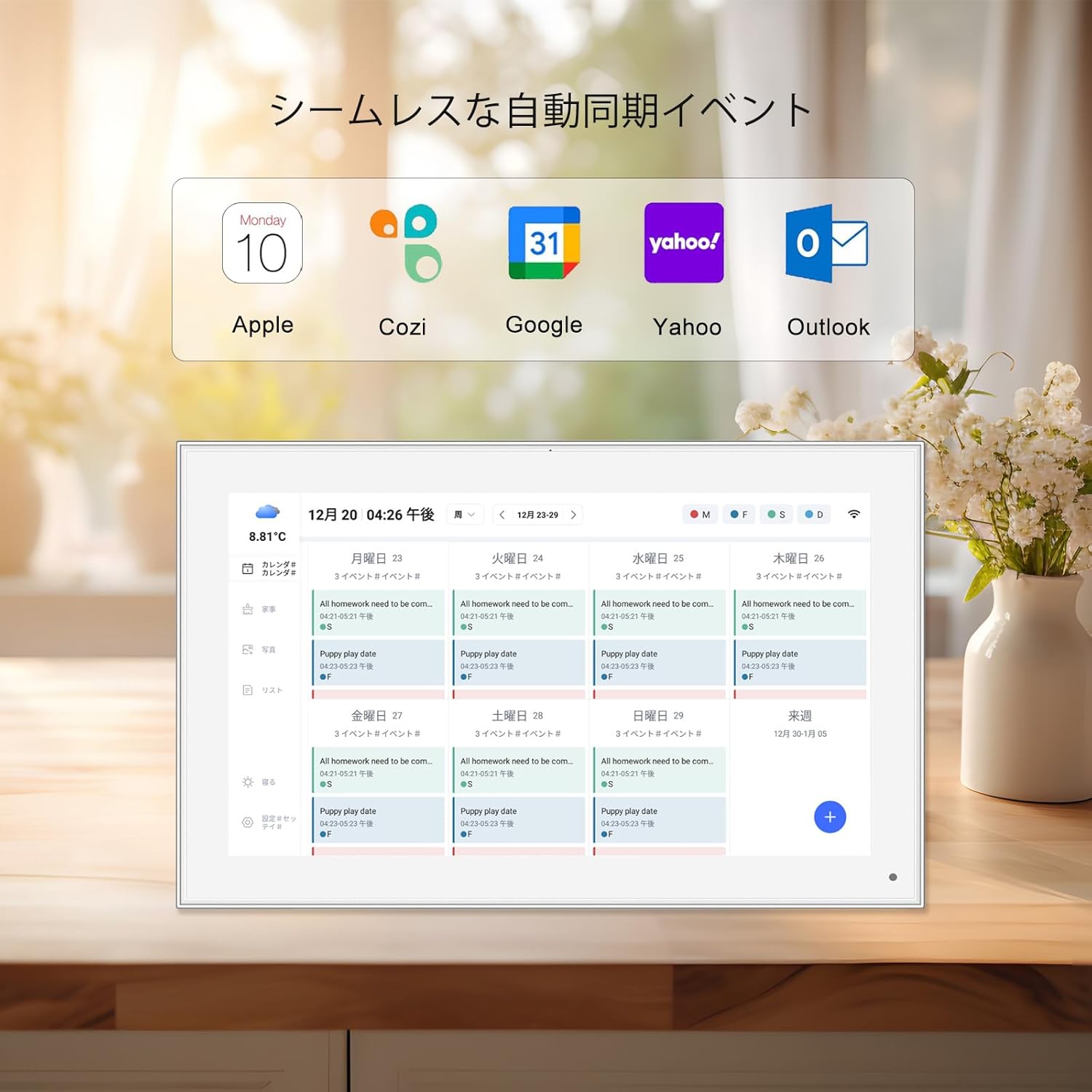
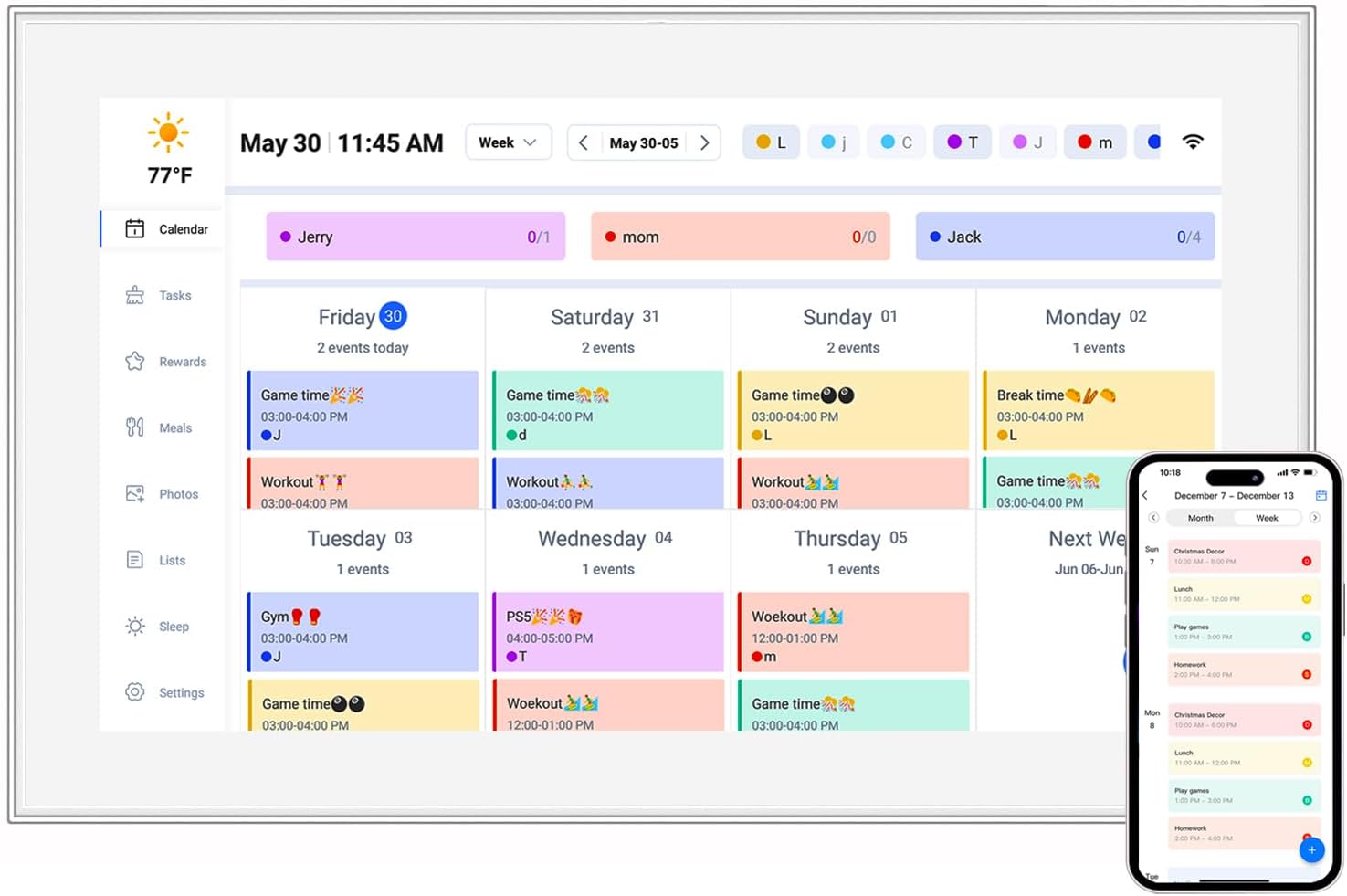
Here's a fun bonus: When you're not on the go, a touch portable display can double as a smart home hub. Mount it on a wall or place it on your desk, and use it as a 15.6 inch digital calendar to keep track of appointments, to-do lists, or family photos. Some models even support apps like Google Calendar or Microsoft To Do, so you can sync your schedule and check it with a quick tap. Businesses can use them as compact digital signage in lobbies or meeting rooms—display menus, announcements, or presentations, and let visitors interact with the content directly via touch.
With so many options on the market, it can be hard to choose. To help narrow it down, here's a snapshot of some popular touch portable displays, including the standout 24.5 inch portable monitor :
| Model | Size | Resolution | Weight | Connectivity | Battery Life | Key Features |
|---|---|---|---|---|---|---|
| 24.5 Inch Portable Monitor (Example Model) | 24.5 inches | 4K (3840x2160) | 2.8 lbs (1.27 kg) | USB-C (Power Delivery), HDMI | 5 hours (wireless use) | Incell touch, 100% sRGB, built-in stand, 10-point multi-touch |
| 15.6 Inch Compact Model | 15.6 inches | Full HD (1920x1080) | 1.7 lbs (0.77 kg) | USB-C, Mini HDMI | 6 hours | Lightweight aluminum frame, foldable stand, anti-glare coating |
| 13.3 Inch Ultra-Portable | 13.3 inches | Full HD (1920x1080) | 1.3 lbs (0.59 kg) | USB-C (data only, no power delivery) | 3 hours (battery optional) | Slim design, touch + stylus support, fits in most laptop bags |
| Incell Portable Smart TV (Hybrid Model) | 21.5 inches | 4K (3840x2160) | 3.5 lbs (1.59 kg) | USB-C, HDMI, Wi-Fi, Bluetooth | 4 hours | Smart TV apps (Netflix, Hulu), incell touch, built-in speakers |
As you can see, there's a model for every need. The 24.5 inch portable monitor stands out for its large size and 4K resolution, making it ideal for productivity and creative work, while the 13.3 inch model is perfect for frequent travelers. The incell portable smart TV hybrid even adds smart features, blurring the line between display and entertainment hub.
You might be wondering: "Can't I just use my tablet as a portable display?" Or "Why not get a projector for big-screen viewing?" It's a fair question—let's break down the differences.
Tablets are great, but they're designed as standalone devices with their own operating systems (iOS, Android). A touch portable display, on the other hand, is a "dumb" screen (in the best way) that mirrors or extends your existing device's display. That means you're not limited to tablet apps—you can use full desktop software, games, or phone content on a larger screen. Tablets also have fixed aspect ratios (usually 4:3 or 16:10), while portable displays often use 16:9 (the same as most laptops and TVs), making them better for movies, spreadsheets, or dual-screen setups. Plus, portable displays typically have higher resolution and brightness than tablets, since they don't need to pack in a battery, processor, and speakers.
Projectors like the hy300 ultra projector are great for large-scale viewing (think movie nights or presentations), but they have drawbacks. They require a dark room to look good (bright environments wash out the image), need a flat surface to project onto, and can be bulky. A portable display, by contrast, has its own built-in screen, so you can use it anywhere—even outdoors in sunlight. It also offers instant setup (no aligning or focusing), sharper details (no blurriness from projector lenses), and touch interaction, which projectors can't match. For intimate or on-the-go use, a display wins hands down.
Traditional monitors have better specs (higher refresh rates, more ports) and are cheaper, but they're fixed to your desk. If you never need to work outside your home or office, a desktop monitor is fine. But if you value flexibility—working from a café, collaborating in a meeting, or setting up a temporary workspace—a portable display is worth the investment. Plus, the touch feature adds a layer of interaction that traditional monitors lack.
As tech evolves, so will touch portable displays. Here's what to expect in the coming years:
At the end of the day, a touch portable display isn't for everyone. If you're perfectly happy with your current setup and never need extra screen space on the go, you might not need one. But if you crave flexibility, value intuitive touch interaction, or want to boost productivity wherever you are, it's a tool that pays for itself. From the 24.5 inch portable monitor that transforms your coffee shop into a dual-screen office, to the compact 13.3 inch model that fits in your backpack, there's a size and style for every lifestyle.
Think of it this way: Technology should adapt to you , not the other way around. A touch portable display does just that. It's a screen that goes where you go, works how you work, and lets you interact with content in the most natural way possible—with your hands. In a world that's always on the move, that's not just convenient. It's revolutionary.