In today's fast-paced business world, digital tools are no longer just about efficiency—they're about connection. Digital photo frames, once seen as personal gadgets for displaying family photos, have evolved into powerful enterprise tools. From lobbies showcasing company culture to retail spaces highlighting promotions, from healthcare facilities keeping patients informed to offices fostering team morale, these devices play a quietly vital role. But for enterprises, buying digital photo frames isn't as simple as picking one off a shelf. It requires careful thought about how the device will integrate into workflows, serve specific business needs, and deliver long-term value. Let's break down the core considerations that should guide your procurement process, ensuring you invest in frames that don't just display images, but drive results.
The first thing anyone notices about a digital photo frame is its display—and for enterprises, that first impression matters. A blurry, dim screen won't just look unprofessional; it could undermine the message you're trying to convey, whether that's a product launch, a patient update, or a team achievement. So, what should you prioritize here?
Start with resolution. For most business settings, a minimum of 1920x1080 (Full HD) is non-negotiable. This ensures text—like event details or company slogans—and images remain sharp even when viewed up close. For larger displays, say a 21.5 inch wifi digital photo frame in a retail window or hotel lobby, consider 4K resolution if the budget allows; it elevates the visual impact, making colors pop and details crisp, which is especially important for branding materials.
Brightness is another key factor, measured in nits. Indoor office environments might get by with 200-300 nits, but if the frame will be near natural light (think storefronts or sunlit lobbies), aim for 500 nits or higher. This prevents glare from washing out content, ensuring your message stays visible all day. Panel type matters too: IPS panels offer wider viewing angles, which is critical if the frame will be viewed from the side—like in a busy hallway or conference room. TN panels, while cheaper, often have limited angles, leading to color distortion when viewed off-center.
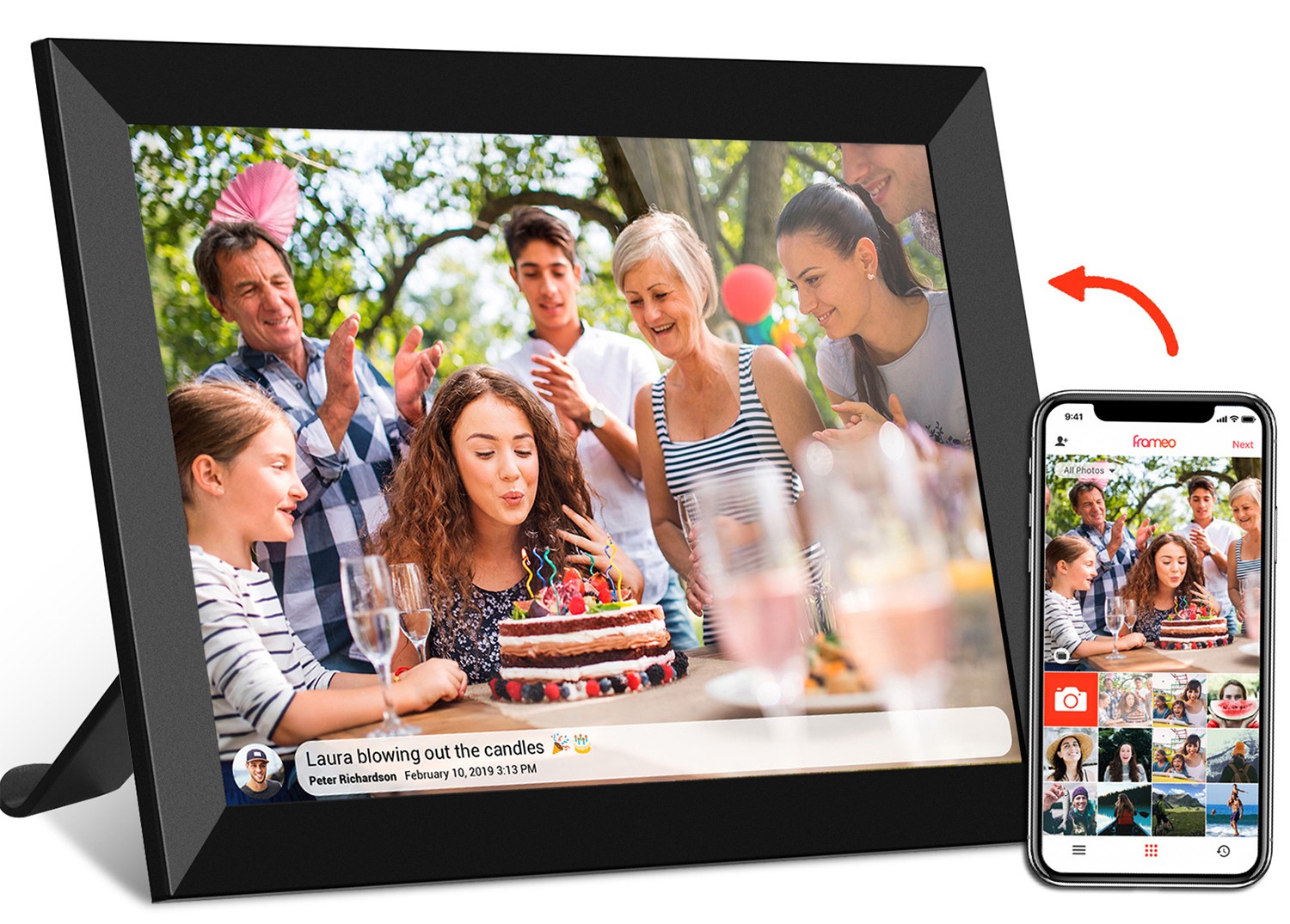
Then there's size. This isn't just about "bigger is better"—it's about matching the frame to its purpose. A 10.1 inch frameo wifi digital photo frame, for example, is perfect for intimate settings: desk displays in offices, patient rooms in hospitals, or small retail counters. Its compact size doesn't overwhelm the space, and it's easy to move if needed. On the flip side, a 21.5 inch model commands attention—ideal for lobbies, trade show booths, or large retail floors where you want to draw eyes to promotions or company milestones.
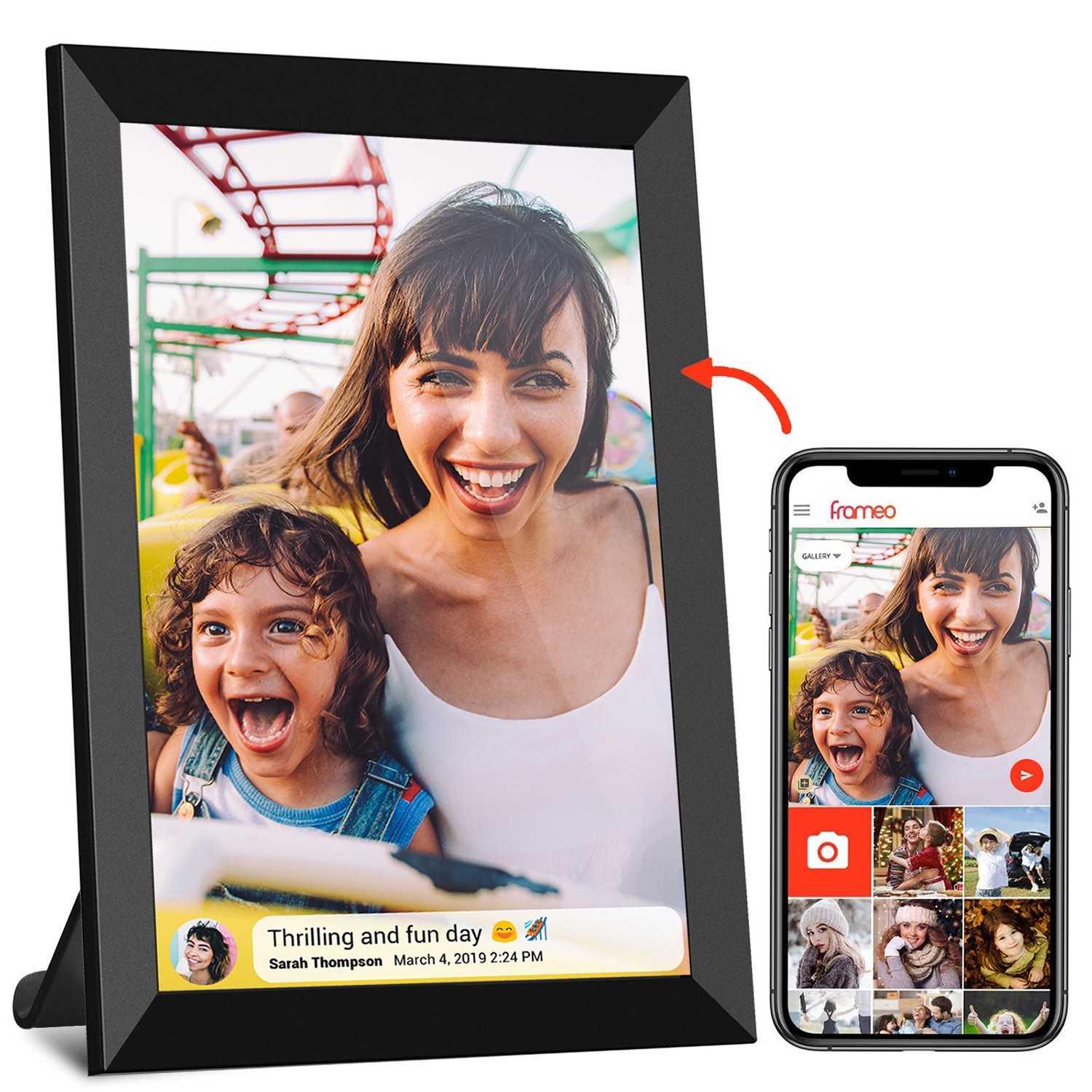
Aspect ratio is often overlooked but crucial. Most consumer frames use 16:9 (widescreen), which works for videos, but if your enterprise relies heavily on photos (e.g., team events, product shots), a 4:3 screen might be better. It avoids cropping standard photos, keeping faces and details intact. For example, a 19 inch wifi digital photo frame with a 4:3 screen would be a smart choice for a museum or art gallery displaying classic photography, where preserving the original composition matters.
| Frame Size | Typical Use Case | Recommended Resolution | Best For |
|---|---|---|---|
| 10.1 inch (e.g., Frameo wifi digital photo frame) | Desk displays, patient rooms, small retail counters | 1280x800 or 1920x1080 | Intimate, up-close viewing; frequent movement/relocation |
| 21.5 inch wifi digital photo frame | Lobbies, retail windows, conference room walls | 1920x1080 (Full HD) or 4K | High-traffic areas; making a bold visual statement |
| 19 inch 4:3 screen | Museums, art galleries, historical displays | 1280x1024 (4:3 native) | Preserving original photo composition; classic content |
Ultimately, display quality and size should align with your "audience distance." A frame meant to be viewed from 5 feet away (like a desk) doesn't need the same specs as one viewed from 20 feet (like a lobby wall). Test different options in your actual space if possible—what looks good in a showroom might feel too small or too bright in your unique environment.
For enterprises, the true value of a digital photo frame lies in how easily you can update its content. Imagine managing 50 frames across 10 offices—if each requires a USB drive or manual upload, you're looking at hours of tedious work, not to mention the risk of outdated content. That's why connectivity and the software ecosystem surrounding the frame are make-or-break factors.
Wifi is table stakes here. A wifi digital photo frame allows you to send content wirelessly, eliminating the need for physical access. But not all wifi setups are equal. Look for frames with dual-band wifi (2.4GHz and 5GHz) to avoid interference in busy office networks. 5GHz offers faster speeds and less congestion, which is key if you're frequently sending high-resolution images or short videos. Also, check if the frame supports WPA3 security—critical for protecting sensitive business data, especially in regulated industries like healthcare or finance.
Beyond basic wifi, consider the ecosystem that powers the frame. This is where brands like Frameo stand out with their Frameo cloud frame technology. Frameo's system lets users send photos directly via a mobile app, which are then synced to the frame in seconds. For enterprises, this means marketing teams can push new promotions to retail frames instantly, HR can update employee spotlights across offices, or healthcare staff can send patient updates to a room's frame without entering the space. The best ecosystems also offer central management dashboards, allowing admins to control multiple frames from one interface—schedule content, monitor battery life (for portable models), or troubleshoot connectivity issues remotely. This is a game-changer for scalability; as your enterprise grows, you won't be adding more work to your plate.
Don't overlook offline capabilities, either. What happens if the wifi goes down? A good frame should store content locally (look for built-in storage, like 32GB) so it can continue displaying pre-scheduled images or videos without interruption. Some models even allow USB or SD card backups, giving you a failsafe for critical content.
For specialized use cases, explore additional connectivity options. PoE (Power over Ethernet) is a boon for meeting rooms or lobbies, where you can power the frame and transmit data through a single Ethernet cable—no messy wires, and more reliable than wifi in high-traffic areas. Bluetooth might be useful for quick, one-off updates (e.g., a sales rep sending a product demo to a retail frame), but it's less practical for enterprise-wide management. Prioritize the features that align with your workflow: if your team is always on the go, app-based cloud sharing (like Frameo) will be indispensable; if you need rock-solid reliability, PoE or Ethernet should be top of the list.
A digital photo frame is only as useful as it is easy to use. If your team finds the software clunky or confusing, even the fanciest hardware will gather dust. For enterprises, this means prioritizing user experience (UX) and software features that cater to both admins and end-users.
Start with the interface. A touchscreen can simplify navigation—imagine a receptionist quickly swiping to update lobby content or a nurse adjusting a patient's frame with a tap. But touchscreens add cost, so if the frame is in a public area (and prone to fingerprints) or managed centrally, a non-touch model with a simple remote or app control might be better. Look for intuitive menus: icons should be clear, and common tasks (like uploading a photo or adjusting brightness) should take 3 steps or less. Avoid frames with overly technical settings; your team shouldn't need a IT degree to use them.
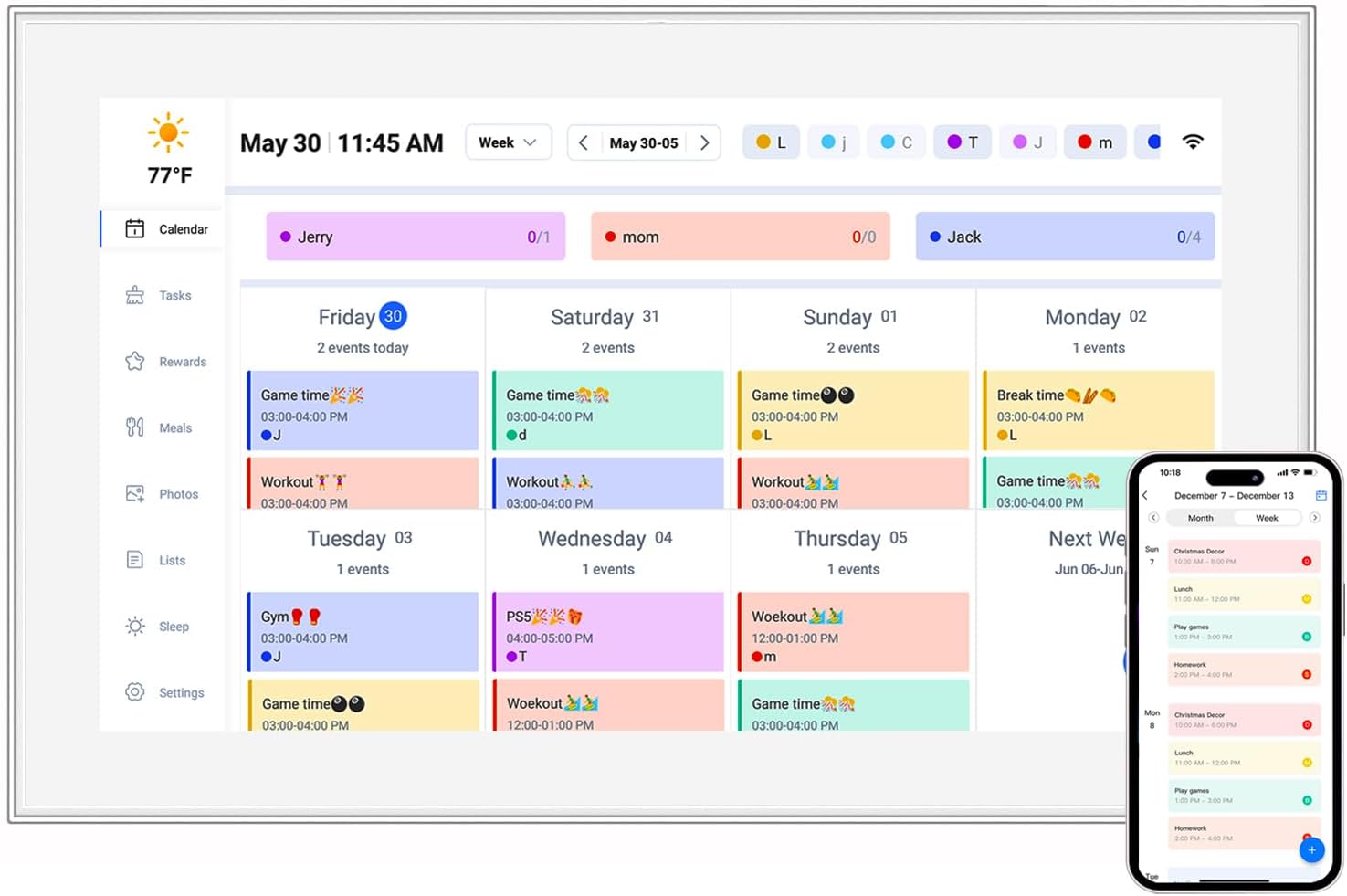
Content scheduling is another must-have. Enterprises rarely display static content—you might want morning greetings in the lobby, afternoon promotions, and evening event reminders. A frame with built-in scheduling lets you set content to play at specific times or dates, so you can "set it and forget it." For example, a retail store could schedule holiday ads to run automatically in December, or a hotel could rotate between local attraction highlights and guest testimonials throughout the day. Advanced systems even allow "playlists" of content, ensuring variety without manual updates.
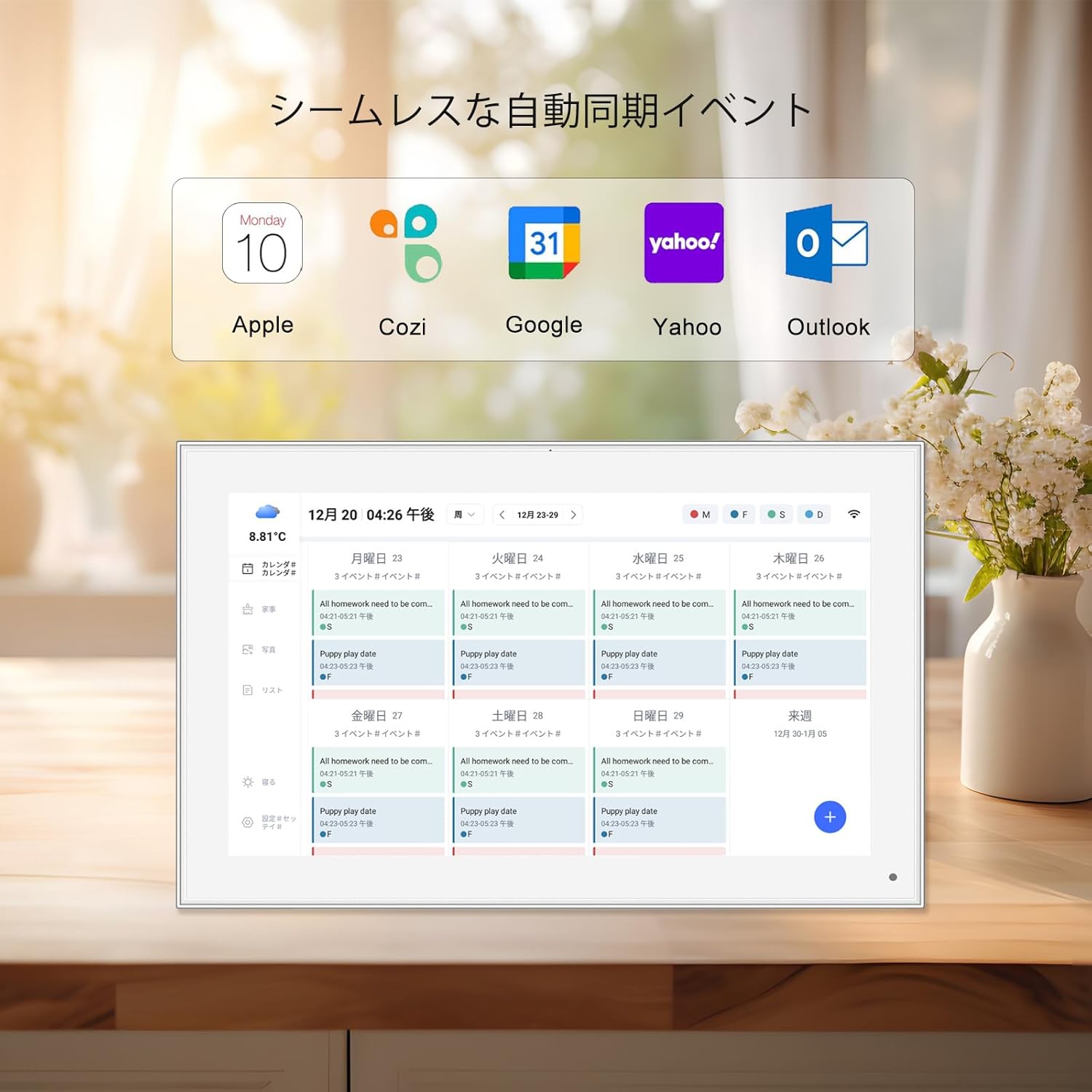
Compatibility is key, too. Your enterprise likely uses a mix of devices—iPhones, Androids, Windows PCs—and your frame should play nice with all of them. The best frames support multiple file formats (JPEG, PNG, MP4, even PDF for documents) and integrate with common cloud storage services (Google Drive, Dropbox) or enterprise tools (Microsoft Teams, Slack). For example, a marketing team using Google Workspace could auto-sync a shared "promotions" folder to all retail frames, ensuring everyone has the latest ads without manual uploads.
Access control is critical for larger teams. You don't want every employee to have the ability to change lobby content, but you might want regional managers to update their own office frames. Look for software that lets you set user roles: admins with full access, contributors who can send content but not delete it, and viewers with read-only access. This keeps content secure and ensures only authorized users make changes—a must for compliance in regulated industries like healthcare, where patient information might be displayed.
Finally, consider future-proofing. Software updates should be automatic, so your frame doesn't become obsolete as new features roll out. Brands like Frameo regularly update their cloud frame software to add new sharing options or security patches, ensuring your investment stays relevant for years. Avoid "closed" systems that don't allow updates—you'll end up replacing frames sooner than needed.
Enterprise procurement isn't just about today—it's about tomorrow. Will the digital photo frames you buy today still meet your needs in 2, 3, or 5 years? Can you easily add more frames as your business expands? And can they be tailored to reflect your brand, rather than looking like generic off-the-shelf products? These are the questions scalability and customization answer.
Scalability starts with management. If you're buying 5 frames now but plan to add 50 more next year, a system that requires manual setup for each new device will quickly become a headache. Look for frames that support bulk deployment: pre-configure settings (wifi, user roles, default content) in a "template" and push it to all new frames, cutting setup time from hours to minutes. Cloud-based ecosystems (again, think Frameo cloud frame) excel here—adding a new frame is as simple as connecting it to wifi and linking it to your account; all settings and content libraries sync automatically.
Hardware durability matters too. Enterprise frames should be built to withstand daily use, especially in high-traffic areas. Look for features like scratch-resistant glass (important for public spaces where people might touch the screen), sturdy stands or wall-mounting options, and energy-efficient components that reduce heat buildup (critical for frames left on 24/7). For example, a 21.5 inch wifi digital photo frame in a busy airport lounge needs to handle constant power, vibrations from foot traffic, and occasional bumps—opt for commercial-grade hardware over consumer models, which are often built with lighter usage in mind.
Customization is where you can make the frame feel like an extension of your brand. Many manufacturers offer private mold options, where you can tweak the design—think custom colors, logos etched into the frame, or unique stand shapes—to match your company's aesthetic. A 10.1 inch frameo wifi digital photo frame with a private mold, for example, could feature your brand's signature blue bezel or a subtle embossed logo, turning a functional device into a branding tool. For retail or hospitality, this is a small detail that reinforces brand recognition every time someone sees the frame.
Software customization is equally valuable. Can you add a custom welcome message when the frame boots up? Display a company-wide news feed alongside photos? Integrate live data (like weather, stock prices, or social media feeds) into the display? Some enterprise-grade frames offer APIs (Application Programming Interfaces) that let your IT team build custom integrations, linking the frame to internal systems. For example, a healthcare facility could program a frame to pull patient appointment times from their EHR (Electronic Health Record) system, displaying updates in real time without staff intervention.
Don't forget about power options for scalability. If you're deploying frames in remote locations or temporary spaces (like pop-up shops), battery-powered models with long life (8+ hours) might be necessary. For permanent setups, hardwired power is more reliable, but PoE (as mentioned earlier) simplifies installation by combining power and data in one cable. The key is flexibility—choose a mix of options that let you adapt to new spaces and needs without overcomplicating your infrastructure.
Let's talk about the elephant in the room: cost. Enterprise procurement always involves budget constraints, but focusing solely on the lowest upfront price can be a costly mistake. A cheap frame might save you money today, but if it breaks down in a year, lacks critical features, or requires constant maintenance, it will cost more in the long run. Instead, think about total cost of ownership (TCO) and return on investment (ROI)—what value will this frame deliver to your business?
Start by breaking down costs. Upfront hardware is just one part: consider installation (wall mounting, wiring), software subscriptions (some enterprise ecosystems charge per frame or per user), and maintenance (repairs, replacements). A $100 consumer frame might seem like a steal, but if it needs to be replaced every 18 months, while a $300 commercial-grade frame lasts 5 years, the TCO of the cheaper model is actually higher. Look for extended warranties (3+ years) to reduce repair costs—many enterprise-focused brands offer this as standard.
ROI comes in many forms. For retail, a well-placed 21.5 inch wifi digital photo frame displaying promotions can boost sales by drawing attention to new products. In offices, frames showcasing employee achievements can improve morale and reduce turnover—a 2023 study by Gallup found that engaged teams are 21% more productive, so even a small boost in morale can translate to tangible gains. In healthcare, frames with patient education content might reduce the time nurses spend answering questions, freeing them to focus on care. Calculate these potential benefits when evaluating cost: a frame that costs $500 but helps increase monthly sales by $1,000 is a no-brainer.
Energy efficiency is another hidden cost saver. Frames with LED backlighting and auto-brightness sensors use less power, which adds up when running 24/7. Look for ENERGY STAR certifications or low power consumption ratings (ideally under 15W for smaller frames, 30W for larger ones). Over a year, a 21.5 inch frame using 20W vs. 40W could save $50+ in electricity per unit—multiply that by 50 frames, and you're looking at $2,500 in annual savings.
Bulk purchasing discounts can lower upfront costs. Many manufacturers offer tiered pricing: the more frames you buy, the lower the per-unit cost. If you know your long-term needs, consider negotiating a multi-year contract that locks in pricing for future orders—this protects you from inflation and ensures consistency in your deployment.
Finally, avoid overbuying features. A frame with 4K resolution and advanced scheduling might be tempting, but if your team only needs to display static photos, you're paying for unused functionality. Start with the basics (wifi, Full HD, cloud sharing) and add premium features only where they'll deliver ROI. For example, a lobby frame seen by hundreds of visitors daily justifies 4K and touchscreen capabilities; a back-office frame for internal updates might not.
Even the best digital photo frames can run into issues—connectivity glitches, software bugs, or hardware failures. When that happens, you need a manufacturer that stands behind their product. After-sales support and compliance aren't glamorous, but they're critical for avoiding downtime and legal risk, especially in regulated industries.
Support should be responsive and accessible. Look for manufacturers that offer 24/7 technical support via phone, email, or live chat—waiting 48 hours for a response isn't acceptable when a lobby frame is displaying outdated content. Check online reviews or ask for references from other enterprise clients to gauge support quality; a brand with a reputation for slow or unhelpful support is a red flag.
On-site service is another consideration for large deployments. If you have 100 frames across the country, shipping a faulty unit back for repair is time-consuming. Some manufacturers offer on-site repair or replacement, where a technician visits your location to fix issues—this minimizes downtime, which is crucial for customer-facing spaces like retail or hospitality.
Compliance is non-negotiable for industries like healthcare, finance, or education. Frames displaying sensitive data (patient names, financial reports, student information) must meet privacy standards like HIPAA (U.S.), GDPR (EU), or FERPA (U.S. education). Ensure the manufacturer can provide compliance certifications, and that their software includes features like data encryption (both in transit and at rest), audit logs (tracking who accessed or changed content), and the ability to remotely wipe data if a frame is lost or stolen.
Warranty coverage should align with your expected usage. A standard 1-year warranty might be enough for consumer frames, but enterprises need longer—3 to 5 years—to match the device's expected lifespan. Look for warranties that cover parts and labor, not just defects in materials. Some brands also offer "no questions asked" replacement for the first year, which is ideal for high-stress environments where downtime is costly.
Finally, consider the manufacturer's track record. How long have they been in the enterprise space? Do they have a history of discontinuing products or abandoning support for older models? A brand with decades of experience in commercial displays (like those specializing in digital signage) is more likely to provide reliable long-term support than a new entrant focused on consumer gadgets.
Enterprise procurement of digital photo frames isn't about picking the shiniest model—it's about aligning the device with your business goals. By focusing on display quality that matches your space, connectivity that simplifies content management, software that's easy to use, scalability that grows with you, cost that delivers ROI, and support that mitigates risk, you'll end up with frames that do more than display images. They'll enhance communication, strengthen branding, and even drive bottom-line results.
Whether you're outfitting a small office with 10.1 inch frameo wifi digital photo frames or a retail chain with 21.5 inch showstoppers, the core considerations remain the same: think about your audience, your workflow, and your long-term needs. Test different options, ask for demos, and don't be afraid to negotiate with manufacturers—after all, this is an investment in your enterprise's success.
In the end, the best digital photo frames for enterprises are the ones you barely notice—because they work seamlessly, enhancing your space and message without requiring constant attention. With the right procurement strategy, you'll find those frames, and wonder how you ever managed without them.