How to evaluate suppliers, spot quality, and build a profitable product line in the growing digital display market
The global market for digital picture frame products has expanded far beyond the simple photo slideshow devices of a decade ago. Today's digital frames are WiFi-connected, app-controlled, and available in sizes ranging from compact 7-inch desk models to massive 55-inch wall-mounted displays. For importers, distributors, and retail brands looking to enter or expand in this category, the key question is not whether there is demand — it is how to find the right manufacturing partner.
This guide walks you through the critical factors to consider when sourcing digital picture frames, from evaluating factory capabilities to understanding the features that drive retail sales. Whether you are a first-time buyer or an experienced importer, these insights will help you make informed decisions and avoid costly mistakes.
Before reaching out to suppliers, it pays to understand the full range of digital picture frame categories available. A factory that offers multiple product lines under one roof can simplify your supply chain and give you better pricing leverage. At a minimum, you should be aware of these core categories:
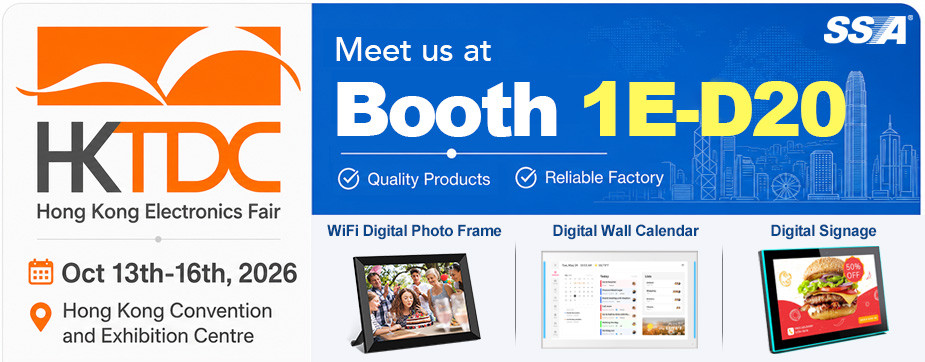
WiFi Digital Photo Frames — These are the fastest-growing segment. WiFi-enabled frames let users send photos remotely via a companion app — a feature that has become a major selling point for families wanting to share moments with grandparents or relatives who live far away. The FRAMEO app is one of the most popular platforms, and many leading frames are certified as FRAMEO-compatible, meaning they work seamlessly with the app's cloud-based photo sharing. Sizes typically range from 8 inches to 21.5 inches, with touchscreen models commanding premium pricing.
Standard Digital Picture Frames — These non-WiFi models play photos and videos from USB drives or SD cards. They remain a strong category for budget-conscious consumers and for applications where WiFi connectivity is not needed, such as trade show displays, retail point-of-sale, or simple home use. Available in a wide range from 7 inches all the way to 55 inches, they offer excellent margins for importers serving price-sensitive markets.
Digital Calendars — A rapidly growing sub-category that combines a digital display with calendar and scheduling functions. These smart calendars sync with Google Calendar and other cloud services, making them popular for family kitchens, office meeting rooms, and senior living facilities. The larger 15.6-inch and 21.5-inch models are particularly popular in the North American and European markets.
Digital Signage — Commercial-grade displays used in restaurants, retail stores, hotels, hospitals, banks, and corporate environments. These range from compact 10.1-inch tabletop units to 55-inch floor-standing kiosks. Many run on Android, support remote content management, and offer touchscreen interactivity. This category has strong demand from B2B buyers in the hospitality, healthcare, and education sectors.
Specialty Categories — Acrylic motion video frames, video brochures, portable monitors, mini projectors, and kids' tablets round out the broader digital display ecosystem. These niche products can be excellent margin builders for importers and distributors who want to differentiate their catalog.
A digital picture frame factory that manufactures all of these categories in-house gives you a significant advantage: consistent quality standards, consolidated logistics, and the ability to mix product types in a single container load.
When sourcing from China, factory experience is one of the most reliable indicators of quality and reliability. A manufacturer with 15 to 18 years in the industry has weathered market shifts, refined its production processes, and built stable relationships with component suppliers — all of which translate to better products and fewer headaches for you.
Key questions to ask any potential supplier:
A factory with a dedicated after-sales engineering department is also worth its weight in gold. When a retailer or end customer has a technical question, you want a supplier that can provide fast, competent answers — not one that disappears after the invoice is paid.
For businesses building their own brand, OEM (Original Equipment Manufacturing) and ODM (Original Design Manufacturing) services are non-negotiable. The right partner should offer customization across four dimensions:
The best factories treat brand customization as a core competency, not an afterthought. They should be able to show you samples of private-label products they have produced for other clients, and walk you through their customization workflow from design approval to production.
For a digital picture frame, the display is everything. When evaluating samples, pay close attention to these specifications:
The software experience is what separates a product that gets returned from one that generates repeat orders and positive reviews. When evaluating a wifi digital photo frame, test the following:
Working with a supplier that offers a comprehensive size range gives you flexibility to serve different market segments without managing multiple vendor relationships. Here is what a full-range factory should cover:
| Product Line | Available Sizes |
|---|---|
| WiFi Digital Photo Frames | 8" / 10.1" / 10.5" / 15.6" / 21.5" |
| Standard Digital Picture Frames | 7" to 55" (16 size options) |
| Digital Signage | 13.3" to 55" (10+ size options) |
| Digital Calendars | 10.1" / 15.6" / 21.5" / 32" |
Having access to this range means you can start with a few best-selling sizes and expand your catalog as you learn what your customers want — all from the same trusted supplier.
Even the best-designed product can encounter issues in the field. What separates a good supplier from a great one is how they handle problems when they arise.
Practical considerations often determine whether a supplier relationship is profitable or painful. Clarify these points before committing:
The digital picture frame market continues to grow as families look for better ways to stay connected, businesses invest in digital signage, and consumers embrace smart home technology. For importers and brand owners, the opportunity is clear — but the supplier you choose will determine whether you capture that opportunity or struggle with quality issues and unhappy customers.
A digital photo frame is more than a piece of hardware. It is a product that people use every day to stay connected with loved ones. When you source from a factory that understands this — one that invests in display quality, software experience, and rigorous quality control — you are not just buying products. You are building a brand that customers will trust and recommend.
Take the time to evaluate potential suppliers against the criteria outlined in this guide. Request samples. Test the software. Ask about customization capabilities. And choose a partner with the experience, product range, and commitment to quality that your business deserves.
Looking for a Trusted Digital Picture Frame Manufacturer?
SSA Electronic is a professional digital picture frame factory with over 18 years of OEM/ODM experience, serving customers in more than 50 countries. We offer a full range of WiFi digital photo frames, standard digital picture frames, digital calendars, digital signage, portable monitors, mini projectors, kids' tablets, and video brochures — all backed by strict quality control and dedicated after-sales engineering support. Contact us today at sales@ssa-digital.com or visit www.ssa-digital.com to discuss your requirements and request samples.