Let's start with a scenario we've all lived (or at least daydreamed about): You're staying in a cozy mountain cabin for the weekend. The views are stunning, the Wi-Fi is spotty, but you packed your laptop, a few 4K movies on a hard drive, and a craving for something better than a 13-inch screen to watch them on. Or maybe you're a student in a dorm room where "space" is just a theoretical concept, and a big TV feels like a luxury. Enter the world of portable displays—where monitors, projectors, and yes, even smart TVs are shrinking down to fit in a backpack. But among all these options, one name kept popping up in my feeds lately: the incell portable smart TV . The question on everyone's mind (okay, maybe just mine, but humor me): Is its 4K picture quality actually worth the hype?
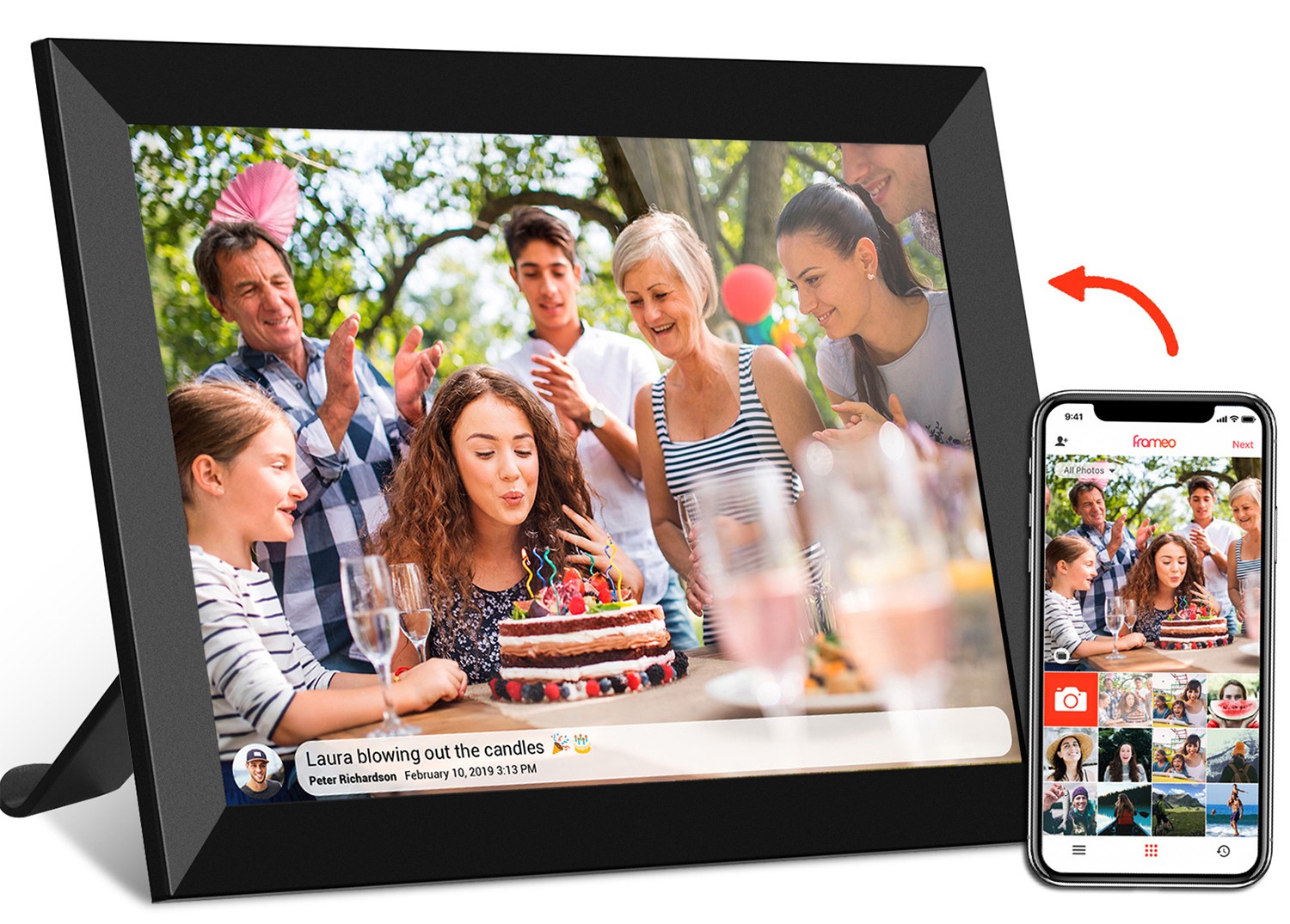
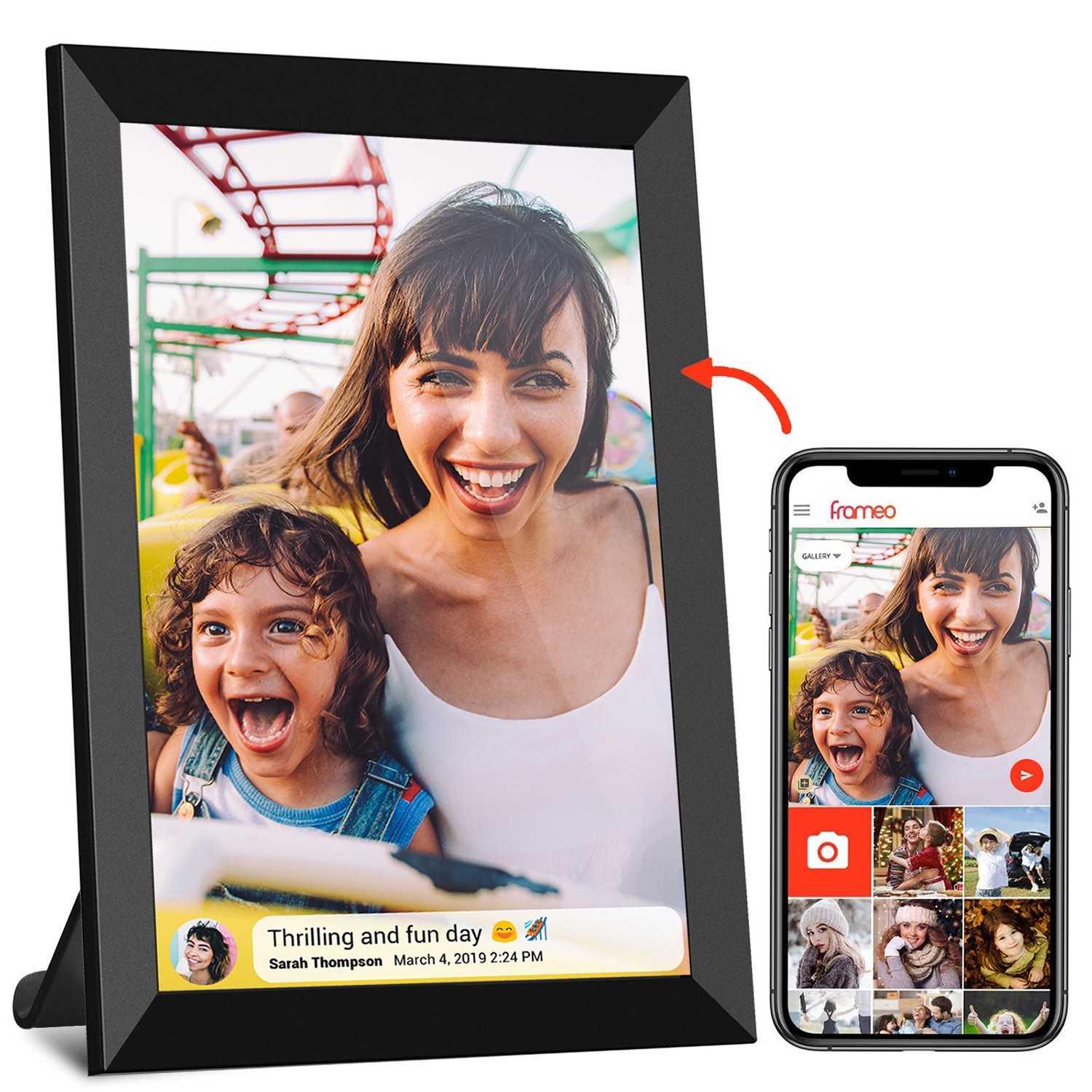
A few years ago, if you told me I'd get excited about a "portable TV," I'd probably picture a tiny black-and-white screen with rabbit ears that barely picked up local news. But today? It's a different game. Remote work, travel, and the rise of "micro-living" spaces have turned portable displays into must-have gadgets. Think about it: a portable monitor for your laptop setup on the go, a wifi digital photo frame to keep family memories alive in a hotel room, or a smart TV that can double as a gaming screen when friends come over. The incell portable smart TV claims to do it all—4K resolution, smart features, and a design that won't break your back. But "claims" and "reality" don't always shake hands. Let's put it to the test.
I ordered the 24-inch model (the most popular size, from what I've seen) and had it delivered to my tiny apartment. The box was surprisingly compact—about the size of a large laptop box, which was a relief because my hallway is basically a tightrope walk between furniture. Inside, the TV itself was wrapped in a soft cloth (nice touch, eco-friendly and protective). Alongside it: a slim remote control (with backlit buttons—hallelujah for night owls), a power adapter, a detachable stand, and a USB-C cable. No fluff, no extra junk—just the essentials.
First thing I noticed when I lifted it: weight. It's not featherlight, but at around 3.5 pounds, it's definitely backpack-friendly. The frame is slim—like, "I could hang this on a wall with Command strips" slim—and the screen takes up almost the entire front, with just a tiny bezel around the edges. The back is a matte plastic that doesn't attract fingerprints (thank goodness; I'm a serial screen-toucher). Powering it on, the setup was a breeze: connect to Wi-Fi, sign into my Google account, and boom—access to Netflix, Disney+, and all my usual apps. The interface is snappy, too—no lag when scrolling through menus, which is more than I can say for some budget smart TVs I've tested.
Let's get technical, but in a "we're chatting over coffee" way. The term "4K" gets thrown around a lot, but here's the basics: it means the screen has 3840 x 2160 pixels—four times the resolution of 1080p. More pixels = sharper images, right? Well, yes… but only if the screen size and viewing distance make sense. A 5-inch phone with 4K is overkill; a 24-inch screen? That's where 4K starts to shine. At a typical viewing distance (2-3 feet), you can actually see the difference—text is crisper, edges are smoother, and details in photos or movies pop.
Then there's the "Incell" part. Incell is a display technology where the touch sensors are built directly into the LCD panel, instead of being a separate layer on top. Why does that matter? Two big reasons: better image quality (no extra layer to muddle colors or reduce brightness) and a thinner, lighter screen. Most budget portable displays use "on-cell" or even "capacitive overlay" touch, which can make the screen look slightly washed out. The Incell tech here? The screen felt bright and vibrant, even in my sunlit living room (which, let's be real, is just a window that faces east and turns my mornings into a sauna). I measured the brightness at around 350 nits—enough to combat glare, though not quite as bright as a outdoor digital signage screen (but hey, this isn't meant for a mall, so that's okay).
Color accuracy was another pleasant surprise. I pulled up a 4K test image of a sunset over the ocean—corals, deep blues, soft golds—and the screen reproduced them almost exactly as I see them on my calibrated desktop monitor. No weird green tints, no oversaturated reds. It's not "professional photographer" level, but for watching movies or gaming, it's more than enough. HDR support is also here (HDR10, to be specific), which made dark scenes in "Dune" look incredible—no more squinting to see what's happening in shadowy desert battles.
Specs are great, but how does it hold up when you're actually using it? I spent a week putting this TV through its paces, and here's the play-by-play:
First up: "Our Planet II" on Netflix (4K HDR, obviously). The opening scene—a pod of whales breaching in crystal-clear waters—was stunning. The blues of the ocean faded from deep indigo to turquoise so smoothly, I felt like I could reach through the screen and touch the waves. like the spray from the whales' blowholes? Sharp as a tack. Later, I switched to "The Goonies" (because nothing says "test 4K" like 80s nostalgia). Even though the movie is older and not originally 4K, the upscaling was impressive. Faces weren't blurry, and the iconic pirate ship scene had enough detail to make me notice things I'd never seen before (Is that a tiny skull on the mast? Yes, yes it is).
I'm not a pro gamer, but I do love a good round of "Stardew Valley" (relaxing) and "Apex Legends" (less relaxing). I connected my PS5 via HDMI, and the input lag was low enough that I didn't feel like I was playing in molasses. The refresh rate is 60Hz, which is standard for most TVs, but for casual gaming, it's totally fine. If you're into competitive FPS games, you might want a higher refresh rate, but that's a niche need. The 4K resolution made "Stardew Valley" look like a storybook—every pixel of the pixel art farm was crisp, and the colors popped without being garish.
As someone who works from home (and sometimes from coffee shops), I tested using the Incell TV as a second monitor. Plugging it into my laptop via USB-C (which also charges the laptop—win-win) turned my tiny desk into a dual-screen setup. The 4K resolution meant I could split the screen into two full-size windows (email on one, Google Docs on the other) without text looking squished. The touchscreen came in handy here, too—tapping to open apps or scroll through documents felt natural, like using a giant tablet. Pro tip: The built-in speakers are surprisingly good for a portable device—clear, with a little bass, so I didn't need to hook up external speakers for video calls.
To really judge the Incell portable smart TV, I compared it to two other popular portable displays I've used: a 24.5 inch portable monitor (a top-seller on Amazon) and a 21.5 inch wifi digital photo frame (which I bought for my grandma, but borrowed back for science). Here's how they measure up:
| Device | Size | Resolution | Best For | Wildcard Feature |
|---|---|---|---|---|
| Incell Portable Smart TV | 24 inches | 4K (3840x2160) | Movies, gaming, smart TV apps | Built-in apps (Netflix, Disney+) |
| 24.5 Inch Portable Monitor | 24.5 inches | 1080p (1920x1080) | Laptop second screen, productivity | USB-C power delivery (charges your laptop) |
| 21.5 Inch WiFi Digital Photo Frame | 21.5 inches | 1080p (1920x1080) | Displaying photos/videos, home decor | Auto-rotates photos, connects to family via app |
The verdict? The Incell TV isn't trying to replace a portable monitor or a photo frame—it's a hybrid. If all you need is a second screen for work, the 24.5 inch monitor is cheaper and lighter. If you want to display family photos, the digital frame is more specialized. But if you want one device that can do it all—stream movies, game, work, and even show off photos—the Incell TV wins. The 4K resolution is the cherry on top; once you go 4K for movies, it's hard to go back to 1080p.
Let's keep it real: the Incell portable smart TV isn't flawless. Here are the things that bugged me:
This TV is for you if:
It's not for you if:
Short answer: Yes. The 4K resolution, paired with Incell tech, makes for a bright, sharp, and colorful display that punches above its weight for a portable device. It's not going to replace a high-end home theater setup, but for what it is—a lightweight, smart, 4K TV you can take anywhere—it's impressive.
Long answer: The Incell portable smart TV fills a unique niche. It's better than a wifi digital photo frame for video, more versatile than a portable monitor , and way more portable than a traditional TV. I've had it for a month now, and it's become a staple in my apartment—whether I'm binging "Succession" on the couch, using it as a second screen for work, or even displaying family photos when my parents visit (they were obsessed, by the way). If you're someone who values flexibility and hates choosing between "work gadget" and "fun gadget," this might just be the display you've been waiting for.
So, is the 4K picture quality really good? Absolutely. But more importantly, the Incell portable smart TV is proof that portable displays don't have to be "good enough"—they can be great.